
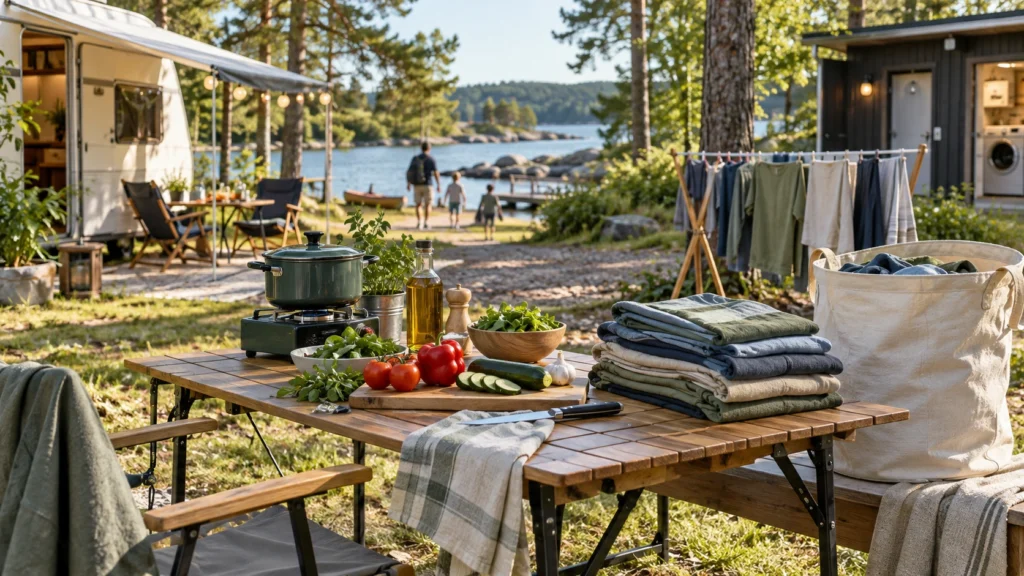
A longer camping stay changes the way small chores fit into the day. One dinner can be improvised, and a damp shirt can wait. After several days, though, meal and laundry scheduling becomes part of making the trip comfortable. The aim is to give both tasks a place in the routine without letting them determine every outing.
Plan around the days you will be away
Start with a rough outline of the stay: arrival, full days on site, longer outings, and departure. Mark the days when you are likely to return late or tired. Those are poor choices for a meal that needs several steps or a load of washing that still has to be dried and put away.
For example, if the family expects to spend most of a day at Dyreparken, preparing a simple dinner plan beforehand leaves less to decide when everyone returns. A laundry load may fit better on a quieter morning, when someone can collect it promptly. The point is to match each task to the time and attention it actually needs.
Build in room to change the plan. Rain may create more wet clothes, while a warm day may call for extra time at the beach. A flexible schedule can absorb both without turning a missed wash or meal into a problem.
Make meals easy to repeat, with enough variety
For a longer stay, plan a few dependable breakfasts and lunches, then choose dinners that suit your available cooking space. Repeating a straightforward breakfast can simplify shopping and cleanup; varying dinner ingredients keeps the routine from feeling too rigid. Think in terms of meals you can assemble with the equipment and storage you have, rather than meals you would cook at home.
Camping guests have access to a guest kitchen with ovens, and there is a restaurant for days when cooking is less convenient. A grocery store across the road can help with forgotten ingredients or smaller shopping trips. Those options make it possible to mix cooking and dining out, but it is still useful to decide before the day begins which approach suits your plans.
A short meal plan might cover:
- An arrival meal that requires little preparation after setting up camp.
- A meal for an outing day with ingredients already on hand when you return.
- A flexible meal that uses remaining ingredients before departure.
Check what utensils, food storage, and washing-up supplies you need for your own setup. If you expect to use a shared kitchen, leave enough time to prepare food and clean your space. Keeping ingredients organized also makes it easier for someone else in the group to take over dinner.
Give laundry its own time window
Laundry works best when you plan for the whole job, rather than only the wash cycle. Clothes need sorting, washing, drying, collecting, and somewhere clean to go afterward. Starting a load shortly before leaving for the day can create a bottleneck if it finishes while you are away.
Laundry with multiple washing machines and tumble dryers, free for guests to use. That is helpful on a longer stay, especially when children’s clothes or towels need attention. Because the machines are shared, choose a time when you can return to collect your items, and allow for the possibility that a machine is in use. Ask at reception about access arrangements when you arrive; camping information says access cards are issued there for guest facilities.
You may not need to wash everything at once. A smaller load of clothes needed for the next few days is often easier to manage than waiting until the entire group is short of clean items. Keep dirty and clean clothes separate in bags or containers, and check care labels before mixing fabrics. If something is still damp when you need to pack, give it more drying time rather than placing it among clean, dry clothes.
Coordinate cooking, washing, and shared space
The trickiest part of meal and laundry scheduling is often overlap. Both jobs can demand attention at the same time, especially near the end of a busy day. A simple division of tasks helps: one person can manage food preparation while another keeps track of laundry, provided everyone knows when to regroup for the meal. If you are camping alone, stagger the tasks so you can finish one before starting the other.
Consider the space at your pitch, too. Bags of laundry should not take over the area where you prepare or eat food. Keep detergent, used clothes, and food supplies in separate places, and clear shared surfaces when you finish. These small habits matter more as the stay goes on and belongings gradually spread out.
Before an outing, make a quick check: Is any laundry running? Is dinner already decided? Do you have what you need for the next morning? That brief pause can prevent a return to unfinished chores when everyone would rather rest.
For more detailed information on this topic, read our guide on What Access Cards Control at a Campsite and When to Use Them.
Keep the final day light
Departure is easier when the last full day does not include a major wash and an elaborate dinner. Use up suitable food you already have, set aside clothes for the journey, and check that laundry is dry before packing it. If you expect to cook on the final evening, choose a meal with limited equipment and cleanup.
A workable routine is rarely a strict timetable. Decide which days can accommodate cooking and washing, keep an easier option for busy days, and leave enough time to finish each task. That gives you clean clothes and regular meals while preserving the freedom that makes a longer camping stay enjoyable.